
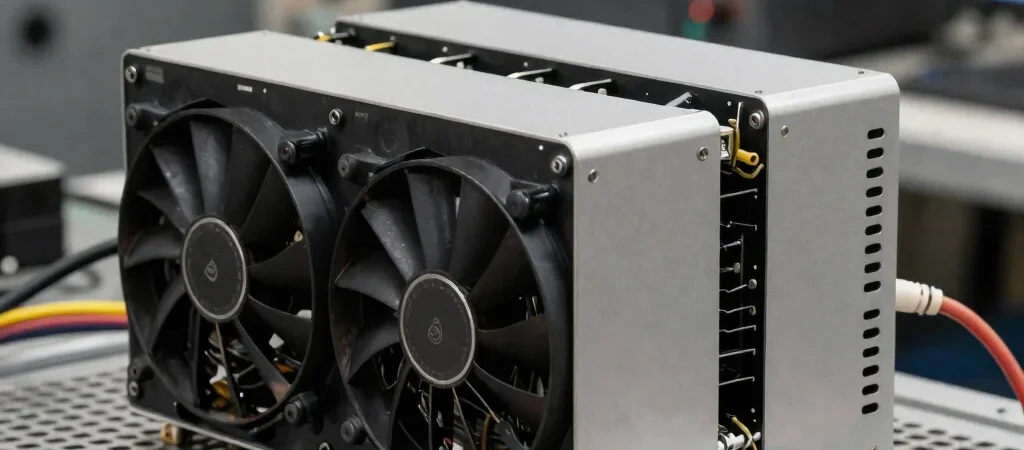
A Bitcoin mining machine can look straightforward on a product page: a model name, a hashrate figure, and a power rating. In a real room, the decision also involves electricity costs, heat removal, noise, and whether the machine fits the place where you plan to run it.
Understand the Hardware Trade-Off
Bitcoin is mined with application-specific integrated circuits, or ASICs, built for the repeated calculations used by the network’s proof-of-work system. A miner’s hashrate describes its computing work, while its power draw indicates how much electricity it uses to do that work. Neither figure alone tells you whether operating it makes sense.
Compare efficiency as well as raw hashrate, and verify that the figures refer to the same operating conditions. Also check the power supply requirements, physical dimensions, cooling needs, and manufacturer’s documentation; a machine that cannot be safely powered or cooled is not a practical choice.
Count the Costs Around It
Electricity is a continuing expense, not a one-time purchase. Estimate it using the miner’s stated consumption and the rate you would actually pay, then account for cooling, ventilation, network access, maintenance, and any pool fees if you plan to mine through a pool.
A miner also turns much of its electrical input into heat and makes substantial noise. A spare room or garage may not have the ventilation, sound tolerance, or electrical setup the equipment requires. Check local rules and your electrical system before treating a household outlet as ready for continuous operation.
Keep Profitability in Perspective
Mining returns depend on several moving parts, including Bitcoin’s price, network difficulty, block rewards, fees, uptime, and operating costs. Difficulty changes as the network’s total computing power shifts, so a calculation based on today’s conditions is an estimate—not a promise about future results.
Before choosing a machine, make a conservative operating estimate and ask what would happen if power costs rose, the miner ran less than expected, or network conditions changed. If the numbers only work under an optimistic scenario, the machine’s headline hashrate is not the answer.